

¿Qué pasaría si tu error de viaje más caro no fuera un vuelo perdido, sino simplemente encender tus datos móviles en la puerta de llegadas? Muchos viajeros aterrizan e inmediatamente se preguntan, "¿puedo usar mi teléfono en otro país?" sin que al regresar a casa les llegue una factura de roaming de cuatro cifras. En 2026, los principales operadores estadounidenses todavía cobran aproximadamente $12 al día por pases internacionales. Estos costos son innecesarios. Te mereces una forma más inteligente de mantenerte conectado.
Entendemos la ansiedad de los cargos ocultos y la confusión que rodea a los dispositivos desbloqueados. Es frustrante sentirse desconectado en una ciudad extranjera. Esta guía te muestra cómo evitar las tarifas tradicionales de los operadores y asegurar datos predecibles y de bajo costo. Descubrirás cómo mantener tu número de teléfono original para WhatsApp e iMessage mientras disfrutas de conectividad instantánea en el momento de aterrizar. Cubrimos las últimas políticas de operadores de 2026 y explicamos cómo la tecnología eSIM digital hace que el roaming tradicional sea obsoleto. Prepárate para una experiencia de viaje sin estrés y digital.
Puntos clave
- El hardware moderno admite bandas globales, pero evitar las altas tarifas de roaming requiere una estrategia digital.
- Confirma que tu dispositivo está desbloqueado y es compatible con eSIM para responder a la pregunta "¿puedo usar mi teléfono en otro país?" con total confianza.
- Utiliza la tecnología SIM digital para mantener tu número original para iMessage y WhatsApp mientras evitas los costosos pases diarios del operador.
- Asegura conectividad instantánea en más de 170 países activando planes de datos locales o regionales antes de aterrizar.
- Elimina la sorpresa en la factura eligiendo paquetes de datos prepagos predecibles que proporcionan acceso directo a las redes locales.
Tabla de Contenidos
¿Puedo usar mi teléfono a nivel internacional? La respuesta corta
Sí, la respuesta corta es casi con toda seguridad sí. Tanto si tienes el último modelo como un dispositivo de hace unos años, los smartphones modernos están diseñados para ser ciudadanos globales. Soportan bandas de red estandarizadas que les permiten comunicarse con torres celulares en casi todos los rincones del mundo. Sin embargo, la verdadera pregunta que deberías hacerte no es "¿puedo usar mi teléfono en otro país?", sino "¿cuánto me cobrará mi operador por hacerlo?". Las bandas estandarizadas significan que tu teléfono está técnicamente listo. Tu cartera podría no estarlo.
Comprender la mecánica de cómo interactúan las redes es el primer paso para responder a la pregunta: ¿puedo usar mi teléfono en otro país sin arruinarme? Cuando aterrizas, tu dispositivo no deja de funcionar. Inmediatamente comienza a buscar una señal. Por defecto, tu teléfono intentará conectarse a una red local que tenga un acuerdo de colaboración con tu proveedor de origen. Esta conexión es el puente que permite que tus aplicaciones y mensajes funcionen, pero tiene un costo adicional.
¿Qué sucede cuando enciendes tu teléfono en el extranjero?
En el momento en que desactivas el modo avión, tu teléfono realiza un "apretón de manos" digital con una torre extranjera. Este proceso, conocido como roaming internacional, te permite mantener una conexión incluso cuando estás fuera del área de cobertura de tu proveedor de origen. El roaming de datos es el proceso de usar una red extranjera para acceder a los servicios del operador local. Aunque esto suena conveniente, a menudo es la forma más cara de mantenerse conectado. Tu operador de origen esencialmente alquila espacio en la red local y te pasa ese alto costo, más un margen significativo, directamente a ti.
Los costos ocultos del roaming tradicional
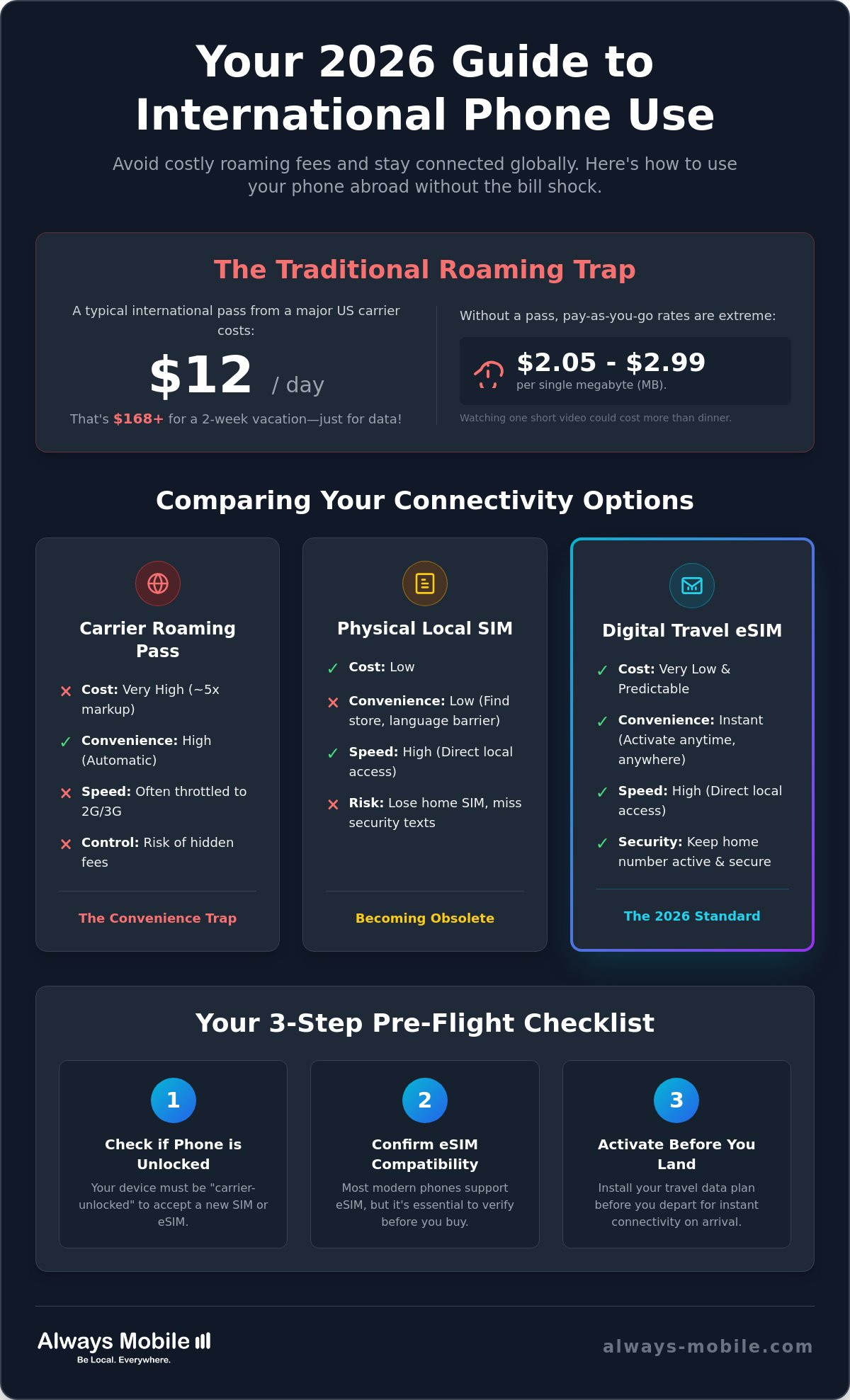
Confiar en tu configuración predeterminada es una receta para el impacto en la factura. En 2026, los principales operadores estadounidenses como AT&T y Verizon suelen cobrar aproximadamente $12 al día por un pase internacional. Si bien $12 pueden parecer manejables para un viaje de fin de semana, unas vacaciones de dos semanas suman $168 a tus gastos de viaje antes incluso de haber pagado una sola comida. Si no tienes un pase diario, la situación se vuelve aún más grave. Las tarifas de pago por uso en 2026 pueden dispararse entre $2.05 y $2.99 por megabyte. A esos precios, simplemente descargar una foto de alta resolución o ver un breve videoclip podría costarte más que tu cena. Para usar tu teléfono de forma económica, debes alejarte de estos modelos de roaming heredados y adoptar planes que utilicen tarifas de datos locales. La planificación proactiva antes de abordar tu vuelo es la única forma de asegurar que tu teléfono siga siendo una herramienta de navegación en lugar de una fuente de estrés financiero.
Comparando tus opciones: Roaming vs. SIM local vs. eSIM
Elegir la forma correcta de mantenerse conectado depende de tus necesidades de viaje específicas. Aunque técnicamente puedes usar tu teléfono en otro país a través de varios métodos, cada uno ofrece un equilibrio diferente de costo, conveniencia y velocidad. En 2026, los viajeros generalmente eligen entre tres caminos: el plan de roaming de su operador de origen, una tarjeta SIM física local o una eSIM digital. Los planes de operador ofrecen la mayor conveniencia, pero se sitúan en el punto de precio más alto del mercado. Las SIM físicas requieren un intercambio manual y un viaje a una tienda local. Las SIM digitales proporcionan el término medio moderno y sin fricciones para el viajero de 2026.
La trampa del 'Plan Internacional' del operador
La comodidad tiene un alto precio. La mayoría de los operadores principales ofrecen un "Pase diario internacional", pero esto suele representar un recargo de 5 veces el precio en comparación con las alternativas digitales. Además del costo, estos planes son conocidos por sus límites de velocidad de "letra pequeña". Muchos proveedores limitan tu conexión a niveles 2G o 3G después de usar solo una pequeña cantidad de datos de alta velocidad. Si quieres una inmersión profunda en estos costos, consulta nuestra guía sobre eSIM prepago vs. Roaming: ¿Cuál te ahorra más? Confiar en tu operador local a menudo significa pagar precios premium por un rendimiento deficiente.
Por qué las SIM físicas están quedando obsoletas
La era de la tarjeta SIM de plástico está llegando a su fin. Los smartphones más nuevos, especialmente los modelos de EE. UU., han eliminado por completo las ranuras para SIM físicas en favor de la tecnología digital. Incluso si tu teléfono tiene una ranura, el proceso es estresante. Debes encontrar una tienda local, sortear las barreras lingüísticas en quioscos extranjeros y manipular un pequeño trozo de plástico con un clip. El intercambio de tarjetas a menudo lleva a la pérdida de las SIM originales. Este es un problema significativo porque te perderás importantes mensajes de seguridad o alertas bancarias mientras tu SIM de casa está guardada en una maleta. Simplemente no vale la pena el riesgo de quedarse desconectado en una ciudad extranjera.
La seguridad es otro factor crítico al decidir cómo conectarse. Seguir los consejos de viaje de telecomunicaciones oficiales es vital para proteger tus datos en redes extranjeras. Evita los riesgos del Wi-Fi público inseguro manteniendo tu propia conexión de datos privada. Para el viajero moderno, una SIM digital es la única opción que combina seguridad con acceso inmediato. Puedes ver los paquetes de datos disponibles incluso antes de salir hacia el aeropuerto. Esto asegura que aterrices con una conexión que funciona y datos predecibles y de bajo costo desde el primer minuto de tu viaje.
Preparando tu teléfono para uso internacional
La preparación es la diferencia entre una conexión instantánea y una llegada estresante. Antes de preguntar "¿puedo usar mi teléfono en otro país?", debes realizar dos comprobaciones críticas de hardware. ¿Está tu teléfono desbloqueado? ¿Es compatible con la tecnología SIM digital? La mayoría de los viajeros asumen que su dispositivo está listo para viajar por el mundo. Muchos descubren la verdad solo después de aterrizar y encontrar sus configuraciones restringidas. Revisa tu dispositivo con anticipación para evitar quedarte sin datos en el aeropuerto.
La compatibilidad de hardware no es una garantía. Si compraste tu teléfono a través de un operador con un plan de pago mensual, es probable que esté "bloqueado" a esa red específica. Este bloqueo de software te impide usar la señal de cualquier otro proveedor. En 2026, las políticas de los operadores siguen siendo estrictas. Verizon generalmente requiere que un dispositivo esté completamente pagado y en servicio durante 12 meses. AT&T requiere 60 días de servicio para dispositivos de pospago; T-Mobile requiere 40 días. Estas restricciones bloquearán cualquier plan de datos internacional que intentes instalar.
Cómo verificar si tu teléfono está desbloqueado
Verifica tu estado en segundos. En un iPhone, navega a Ajustes, pulsa General y selecciona Información. Desplázate hasta Bloqueo de operador. Si dice "Sin restricciones de SIM", tu hardware es libre de aceptar las credenciales de cualquier red. Los usuarios de Android pueden verificar configuraciones similares en Red e Internet. Si tu teléfono está bloqueado, ponte en contacto con tu operador de origen inmediatamente. Solicita un desbloqueo si has cumplido con sus requisitos de servicio. Un teléfono desbloqueado es un requisito previo para viajar de forma asequible. Garantiza que puedas evitar el costoso roaming y conectarte directamente a las redes locales.
Verificación de la compatibilidad con eSIM
La conectividad moderna se basa en SIM digitales en lugar de plástico físico. La mayoría de los dispositivos emblemáticos lanzados en los últimos años son compatibles. Esto incluye iPhones desde el modelo XS en adelante y dispositivos Samsung Galaxy a partir de la serie S20. Los teléfonos insignia de 2026 están casi completamente preparados digitalmente. Para estar seguro, consulta nuestra lista completa de compatibilidad de dispositivos eSIM para tu modelo específico. Confirmar esta compatibilidad ahora garantiza una transición fluida a los datos locales. Una vez que verifiques que tu teléfono está desbloqueado y es compatible con eSIM, estás listo para obtener un plan que funcione en el momento en que aterrices. No esperes a estar en una terminal extranjera para descubrir que tu hardware está restringido.
El estándar de 2026: Usar una SIM de viaje digital (eSIM)
El cambio es innegable. A mediados de 2026, la pregunta "¿puedo usar mi teléfono en otro país?" ya no se trata de encontrar una torre compatible. Se trata de comodidad digital. Juniper Research proyectó que la adopción de eSIM crecería un 30% en 2026, alcanzando más de 1.500 millones de dispositivos en todo el mundo. Esta tecnología te permite descargar un plan de datos directamente a tu teléfono sin tocar una sola pieza de plástico. Eliminas la búsqueda de Wi-Fi en el aeropuerto o el estrés de encontrar un quiosco SIM físico en una ciudad extranjera. Es una alternativa más rápida, segura y asequible al roaming heredado.
Una de las ventajas más significativas es la funcionalidad de doble línea. Tu teléfono puede mantener dos conexiones activas simultáneamente. Esto significa que mantienes tu número de teléfono original activo para WhatsApp, iMessage y los textos críticos de autenticación de dos factores (2FA) del banco. Mientras tanto, tu línea de viaje gestiona todas las aplicaciones de navegación de mapas, redes sociales y traducción a tarifas de datos locales. Es el equilibrio definitivo entre seguridad y utilidad. Obtienes los beneficios de los precios locales sin perder tu identidad digital. Esta es la forma más inteligente de responder a la pregunta "¿puedo usar mi teléfono en otro país?" sin pagar de más.
Cómo instalar una eSIM de viaje
La preparación es sencilla. Compra tu plan en línea antes de partir para tu viaje. La mayoría de los proveedores entregan un código QR por correo electrónico inmediatamente después de la compra. Escanea este código en la configuración de datos móviles de tu teléfono para añadir el nuevo plan. Etiqueta la nueva línea como 'Viaje' o 'Vacaciones' para mantener tu configuración organizada. Esta configuración digital tarda menos de dos minutos y se puede hacer desde tu sala de estar. Evitas las prisas de la puerta de llegada y entras en tu destino completamente conectado.
Activación y gestión de datos
Espera a aterrizar para activar la línea. Enciende la línea de viaje solo cuando llegues a tu país de destino. Esto preserva tu asignación de datos. Debes asegurarte de que la 'Itinerancia de datos' esté activada para la línea de viaje, pero que permanezca desactivada para tu línea principal de origen. Esta configuración específica evita cargos accidentales de roaming de tu operador de origen, mientras que permite que el plan de viaje acceda a redes 4G o 5G locales. Para viajes a varios países, considera planes eSIM regionales para evitar múltiples configuraciones en diferentes fronteras. ¿Listo para mejorar tu experiencia de viaje? Asegura tu plan de datos internacionales y aterriza con conectividad instantánea.
Conectividad simplificada con Always Mobile
Aterrizar en una nueva ciudad no debería implicar una búsqueda del tesoro para encontrar conectividad. Always Mobile simplifica todo el proceso. Ya no tienes que preocuparte por "¿puedo usar mi teléfono en otro país?" porque nuestra infraestructura digital cubre más de 170 países. Proporcionamos acceso directo a redes 4G y 5G locales de alta calidad. Obtienes la misma velocidad que un residente local sin los trámites burocráticos de un contrato tradicional. Todo se gestiona a través de una interfaz digital única e intuitiva. Sin tarjetas SIM físicas. Sin contratos. Sin tarifas ocultas. Solo resultados instantáneos.
Nuestras ofertas están diseñadas para una flexibilidad total. Elige entre Planes eSIM Locales para estancias en un solo país o Planes eSIM Regionales para aventuras con múltiples paradas en Europa, Asia o Sudamérica. Para nómadas digitales y viajeros frecuentes, nuestros Planes eSIM Globales proporcionan una cobertura consistente y fiable en múltiples continentes. No hay tarjetas físicas que perder y no hay suscripciones mensuales pospago que gestionar o cancelar. Es una solución limpia y moderna diseñada para el viajero de 2026 que valora el tiempo y la eficiencia por encima de todo.
Por qué los viajeros eligen Always Mobile
Viajar suele ser impredecible, pero tu factura de móvil no debería serlo. Always Mobile utiliza un modelo estrictamente prepago. Nunca gastas más de lo previsto. Este enfoque elimina el "susto de la factura" a menudo asociado con el roaming tradicional de los operadores. Pagas tus datos por adelantado y los usas según sea necesario. Si tu viaje dura más de lo esperado o usas más datos de lo previsto, las opciones de recarga están disponibles en segundos. Admitimos todos los dispositivos Android y iPhone habilitados para eSIM. Esto garantiza que tu hardware esté listo para el viaje en el momento en que completes tu compra. Es un sistema sencillo que te pone a ti en control de tu conectividad.
Empieza para tu próximo viaje
Comienza tu preparación hoy. No esperes a la última llamada de embarque para asegurar tu conexión. Explora nuestra colección completa de planes de datos internacionales para encontrar el ajuste perfecto para tu itinerario específico. Descarga tu SIM digital ahora y tenla lista incluso antes de empacar tus maletas. Este paso proactivo te asegura que puedas responder a la pregunta "¿puedo usar mi teléfono en otro país?" con un rotundo sí antes de salir de casa. Puedes aterrizar con total confianza, sabiendo que tus mapas, mensajes y aplicaciones de traducción funcionarán en el momento en que se abra la puerta de la cabina del avión. Mantente conectado, mantente seguro y ahorra dinero con Always Mobile.
Asegura tu conexión global hoy
Mantenerse conectado mientras se viaja ya no es una fuente de estrés o un gasto inesperado. El hardware moderno está construido para uso global. Al asegurarte de que tu teléfono esté desbloqueado y elegir la tecnología SIM digital, respondes a la pregunta "¿puedo usar mi teléfono en otro país?" con total confianza. Has superado la era de buscar puntos de acceso Wi-Fi o pagar de más por pases diarios de operador. Ahora tienes las herramientas para aterrizar, activar tu plan y empezar a navegar inmediatamente. Esta eficiencia es el nuevo estándar para el viajero de 2026.
Experimenta el alivio inmediato de un plan de datos transparente y sin contratos. Ofrecemos entrega digital instantánea y acceso a redes 5G locales, asegurando que nunca te desconectes en una ciudad extranjera. Consigue tu eSIM Always Mobile y mantente conectado en más de 170 países sin miedo a cargos ocultos de roaming. Te mereces un compañero de viaje experto en tecnología que priorice tu tiempo y tu presupuesto. Asegura tu plan ahora y concéntrate en lo que realmente importa: tu viaje. ¡Buen viaje y disfruta de la conectividad sin interrupciones de una experiencia verdaderamente digital!
Preguntas Frecuentes
¿Puedo usar mi teléfono en otro país sin que me cobren?
Sí, puedes evitar cargos manteniendo tu teléfono en modo avión y utilizando solo Wi-Fi o un plan de datos prepago. Desactivar la "Itinerancia de datos" en la configuración de tu operador de origen es esencial para evitar cargos automáticos. Usar una SIM digital te permite acceder a redes locales a precios fijos. Esto asegura que nunca te enfrentes a facturas inesperadas cuando preguntas "¿puedo usar mi teléfono en otro país?" antes de tu viaje.
¿Mantendré mi número de WhatsApp si uso una eSIM de viaje?
Sí, mantendrás tu número original de WhatsApp incluso con un nuevo plan de datos. Cuando instales una SIM digital, WhatsApp te preguntará si deseas actualizar tu número. Simplemente selecciona "No" o "Mantener original". Tus chats y contactos permanecerán exactamente como estaban. Esto te permite mantenerte conectado con amigos y familiares usando tu identidad familiar mientras utilizas datos locales para la conexión.
¿Cómo sé si mi teléfono es compatible con redes internacionales?
Casi todos los smartphones fabricados después de 2020 son compatibles con las bandas de red globales necesarias para viajes internacionales. Para verificar tu dispositivo específico, comprueba si está "desbloqueado" en la configuración, en el menú "Acerca de". Si tu hardware está desbloqueado y admite tecnología SIM digital, funcionará en redes locales en más de 170 países. Esta compatibilidad es ahora estándar para la mayoría de los dispositivos emblemáticos de todos los principales fabricantes.
¿Necesito apagar mi tarjeta SIM principal mientras viajo?
No, no necesitas apagar tu línea principal. Los teléfonos modernos te permiten mantener activa tu SIM local para llamadas y mensajes de texto, mientras usas una segunda línea para datos. Simplemente ve a la configuración de tu red celular y establece tu eSIM de viaje como la línea de "Datos Principales". Asegúrate de que la "Itinerancia de Datos" esté desactivada para tu operador local para evitar cargos accidentales costosos mientras estás fuera de casa.
¿Cuál es la forma más económica de obtener datos al viajar al extranjero?
Las SIM digitales prepago son actualmente la forma más asequible de mantenerse conectado. Evitan las altas tarifas diarias de los operadores locales y los costos inflados de los quioscos de SIM en los aeropuertos. Puedes comprar cantidades específicas de datos para tu destino a tarifas locales. Esto proporciona una solución predecible y de bajo costo para cualquiera que se pregunte, "¿puedo usar mi teléfono en otro país?" sin gastar de más en conectividad básica durante sus vacaciones.
¿Puedo usar mi teléfono en Canadá y México gratis?
Muchos planes de los principales operadores de EE. UU. incluyen roaming "gratuito" en Canadá y México, pero a menudo se aplican estrictos límites de datos. Una vez que alcanzas estos límites, tu velocidad puede ser reducida a niveles inutilizables. Si tu plan no incluye roaming en América del Norte, un paquete de datos regional es una alternativa más inteligente. Esto asegura acceso 5G de alta velocidad sin depender de las restrictivas políticas de "uso justo" de los proveedores tradicionales.
¿Qué sucede si me quedo sin datos en mi eSIM de viaje?
Tu conexión de datos simplemente dejará de funcionar una vez que alcances tu límite. No tendrás que pagar tarifas por exceso de uso porque los planes son prepago. Si necesitas más datos, puedes recargar tu plan instantáneamente a través del sitio web de tu proveedor. Esta entrega inmediata te asegura que te mantengas conectado durante tu viaje sin el estrés de buscar una tienda física o esperar un nuevo código de activación.
¿Puedo hacer llamadas telefónicas con una eSIM de viaje solo de datos?
No puedes hacer llamadas telefónicas celulares tradicionales con una SIM digital solo de datos. Sin embargo, puedes usar aplicaciones como WhatsApp, FaceTime, Skype o Messenger para hacer llamadas de voz y video de alta calidad. Estos servicios utilizan tu asignación de datos para conectarte globalmente. Esto suele ser más fiable y significativamente más barato que pagar por el roaming de voz internacional a través de tu operador local mientras viajas en otro país.