

¿Qué pasaría si tu próximo cruce de frontera de Chile a Argentina no implicara una búsqueda frenética de una tarjeta SIM local o una factura de roaming masiva? Probablemente has sentido ese pico de ansiedad cuando la señal de tu teléfono se cae justo cuando necesitas un mapa o un viaje compartido. La mayoría de los viajeros aceptan estos altos costos y las interrupciones de conectividad como parte del viaje. Es frustrante hacer malabarismos con varias tarjetas físicas, pero los planes eSIM modernos para Sudamérica han cambiado las reglas del juego para 2026.
Te mereces una forma mejor de mantenerte en línea. Esta guía te muestra cómo asegurar datos 4G/5G de alta velocidad al instante antes de abordar tu vuelo. Te ayudaremos a evitar las costosas tarifas de roaming y a navegar por el continente con un solo plan de datos manejable. Compararemos las opciones regionales versus las locales, explicaremos cómo mantener tu número de casa activo por seguridad y te mostraremos exactamente cómo mantener una conexión perfecta desde los Andes hasta el Amazonas. Es hora de dejar de preocuparte por tus datos y empezar a concentrarte en tu aventura.
Puntos Clave
- Evita la reducción de velocidad y los altos costos del roaming tradicional del operador cambiando a una solución digital.
- Compara la eficiencia de costos de los planes eSIM regionales de Sudamérica con las opciones locales para viajes de un solo país.
- Aprende cómo mantener tu número original de WhatsApp activo para mensajes seguros mientras usas datos locales de alta velocidad.
- Sigue una sencilla guía de activación de 60 segundos para conectarte al instante sin buscar un quiosco de SIM físico.
- Descubre cómo los planes de datos ilimitados diarios eliminan el estrés de rastrear megabytes durante largos días de viaje.
Por qué tu pase internacional diario es una trampa para viajes por Sudamérica
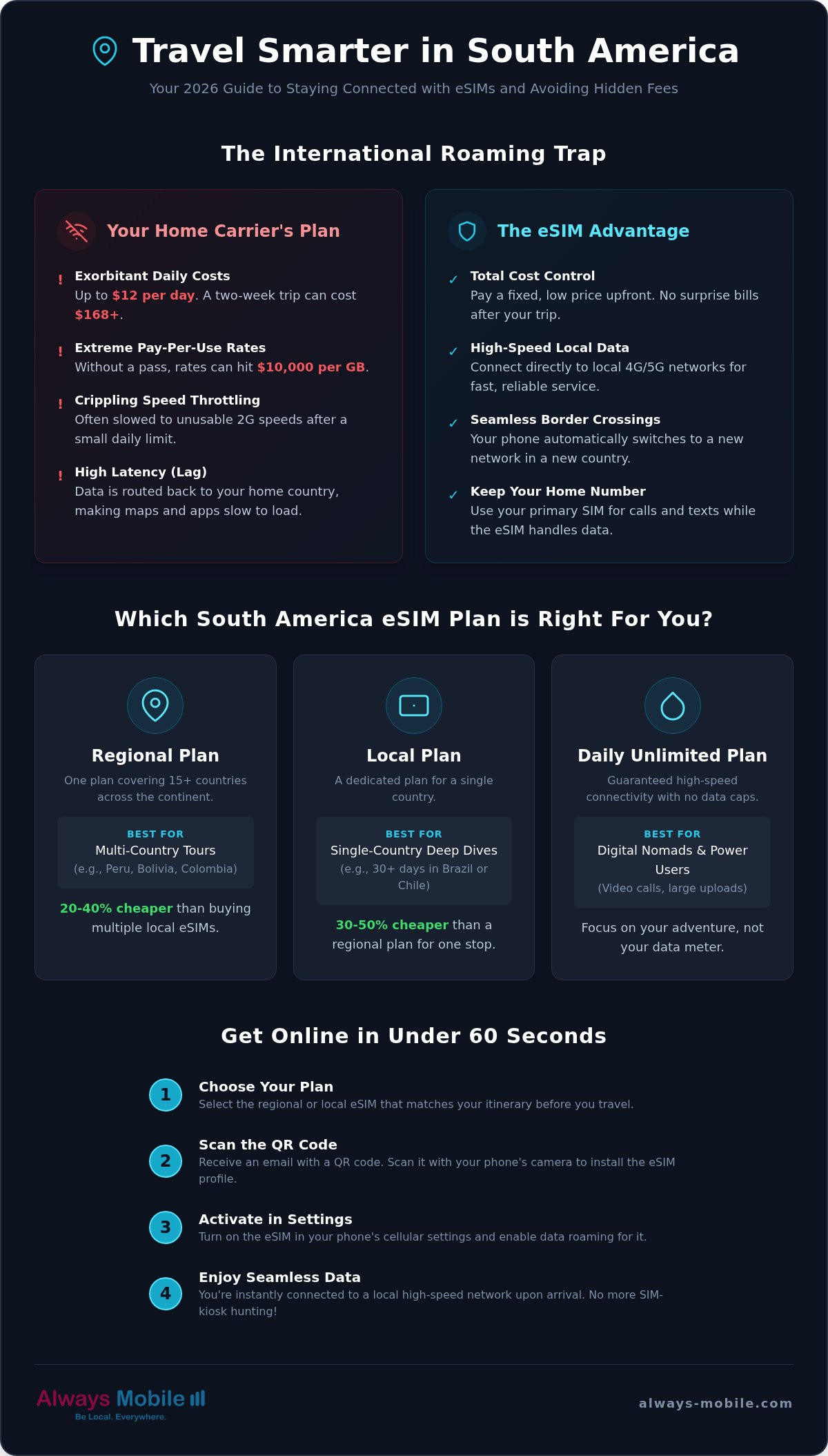
Confiar en el "Pase internacional diario" de tu operador local parece el camino más fácil. También es una trampa financiera. Operadores como AT&T cobran $12 por día, mientras que Verizon cuesta $10. Para un viaje de dos semanas por Perú y Brasil, podrías gastar hasta $168 solo para mantenerte conectado. Sin estos pases, las tarifas de pago por uso pueden alcanzar los $10 por megabyte. Eso es más de $10,000 por un gigabyte de datos. Estos costos se suman rápidamente y ofrecen muy poco valor a cambio.
El costo real del roaming del operador
Los precios altos son solo la mitad del problema. Cuando haces roaming, tus datos a menudo viajan de regreso a tu país de origen antes de llegar a tu teléfono. Esto crea un retraso masivo. Es posible que veas una señal 4G o 5G, pero tus mapas no se cargarán. Muchos operadores también limitan tu velocidad después de un pequeño límite diario. Una vez que alcanzas ese límite, te quedas con velocidades 2G que son inútiles para las aplicaciones de viaje modernas. El uso de la tecnología eSIM resuelve esto al permitirte conectarte directamente a las redes locales de Sudamérica. Obtienes prioridad local y velocidades más rápidas sin el recargo del operador.
Confiar en el Wi-Fi público en grandes ciudades como Bogotá o Buenos Aires es otro error común. Las redes abiertas a menudo no están cifradas y sirven como objetivos fáciles para los hackers. Una conexión de datos dedicada es un requisito de seguridad básico para el viajero moderno. Los planes eSIM para Sudamérica proporcionan un túnel privado y cifrado para tus datos, manteniendo tu información bancaria y de inicio de sesión segura mientras exploras.
Por qué las eSIM solo de datos son más seguras
Los planes de datos prepagos ofrecen total claridad financiera. Pagas tus datos por adelantado. Esto elimina el "susto de la factura" que muchos viajeros experimentan cuando regresan a casa con un extracto de mil dólares. Debido a que estos son planes solo de datos, protegen tu SIM principal de cargos de roaming accidentales. Puedes mantener tu número original activo para WhatsApp y la verificación por SMS mientras la eSIM se encarga del trabajo pesado de la navegación y las redes sociales.
Elegir planes eSIM regionales también elimina el estrés de los cruces fronterizos. Cuando te mueves de Chile a Argentina, tu teléfono cambia de red automáticamente. No hay necesidad de buscar un quiosco de SIM local o intercambiar tarjetas físicas. Es una transición sin interrupciones que te mantiene conectado exactamente cuando más lo necesitas. Esta revolución de la SIM digital ha hecho que viajar por el continente sea más rápido, seguro y significativamente más barato en 2026.
Comparando planes eSIM para Sudamérica: Regional vs. Local vs. Global
Elegir el perfil de datos adecuado depende completamente de tu itinerario. Los viajeros a menudo se enfrentan a una elección entre un plan regional único y múltiples planes locales. Comprender las ventajas y desventajas entre los planes eSIM para Sudamérica garantiza que no pagues de más por datos que no usarás o que no pierdas la conexión en un cruce fronterizo crítico. Tu elección debe coincidir con tu ritmo de viaje y tus necesidades de datos.
La ventaja regional
Los planes regionales son el estándar de oro para el "Gringo Trail". Si tu viaje incluye Perú, Bolivia y Colombia, un paquete regional es tu mejor opción. Utiliza un código QR para cubrir 17 países de Sudamérica, Centroamérica y el Caribe. Obtienes transiciones sin interrupciones. Tu teléfono se conecta a una nueva red en el momento en que cruzas la frontera. Las investigaciones muestran que los planes eSIM regionales suelen ser entre un 20% y un 40% más baratos que comprar tarjetas separadas para cada parada en un viaje por varios países. Elimina la fricción de gestionar múltiples perfiles digitales y garantiza que tengas datos en el momento en que aterrices en una nueva capital.
Cuándo elegir lo local
Los planes locales son mejores para inmersiones profundas. Si vas a pasar 30 días o más en Brasil o Chile, un plan específico para el país a menudo ofrece un mejor valor. Los planes locales para un solo país pueden ser entre un 30% y un 50% más baratos que las alternativas regionales si solo visitas uno o dos destinos. También obtienes un mejor acceso a la infraestructura premium. Brasil y Chile están liderando el continente en el despliegue de 5G. Los planes locales a menudo priorizan estas redes de alta velocidad. También ofrecen más flexibilidad para recargar pequeñas cantidades de datos sobre la marcha a través de una plataforma digital.
Los planes globales funcionan mejor para los viajeros de larga distancia que visitan Sudamérica como parte de una gira mundial. Son más caros pero ofrecen la máxima comodidad en varios continentes.
Antes de comprometerte, consulta los Planes eSIM Regionales para ver qué países específicos están incluidos en los mapas de cobertura de 2026. Hacer coincidir tu plan con tu mapa es la forma más fácil de mantenerte conectado por menos.
Estimando tus datos: WhatsApp, navegación y redes sociales
Quedarse sin datos en medio de un concurrido mercado de Bogotá o en un sendero remoto en la Patagonia es más que un inconveniente. Es un riesgo para la seguridad. La mayoría de los viajeros luchan por equilibrar su uso porque no saben qué aplicaciones son las que más consumen. Elegir entre diferentes planes eSIM para Sudamérica se vuelve mucho más fácil cuando entiendes tu huella digital diaria. Puedes evitar el gasto excesivo al hacer coincidir tu plan con tus hábitos reales.
Puntos de referencia de uso de datos para Sudamérica
La navegación es tu herramienta más crítica, pero es sorprendentemente eficiente. Google Maps suele usar unos 20MB por hora de uso activo. Si lo usas para encontrar un restaurante específico en Lima, el consumo es mínimo. Los mensajes también son ligeros. Un mensaje de texto estándar de WhatsApp casi no usa nada. Sin embargo, las llamadas de voz por WhatsApp consumen aproximadamente 0.5MB por minuto. Las videollamadas son mucho más pesadas, a menudo alcanzan de 5MB a 10MB por minuto. El verdadero devorador de datos son las redes sociales. Subir Reels de alta definición desde Machu Picchu puede consumir 30MB por publicación.
Manteniendo tu número de WhatsApp
La mayor preocupación para muchos viajeros es perder su historial de chat o su lista de contactos. No tienes que preocuparte. WhatsApp te identifica por tu número de teléfono original, pero no le importa qué fuente de datos uses. Cuando actives tu eSIM, tu teléfono te preguntará qué línea usar para los datos móviles. Selecciona la eSIM. Mantén tu SIM principal activa, pero asegúrate de que el "Roaming de datos" esté desactivado para esa línea específica. Esta configuración te permite recibir códigos de texto 2FA en tu número de casa mientras usas la eSIM para todo el tráfico de internet.
Nunca uses la función "Cambiar número" dentro de la configuración de WhatsApp. Esa herramienta es para personas que están cambiando permanentemente a un nuevo número de teléfono. Si la usas, serás eliminado de tus grupos y tus contactos no sabrán quién eres. Simplemente deja la configuración como está. Tu WhatsApp seguirá funcionando exactamente igual que en casa. Es una forma sencilla y directa de mantenerte conectado a tu vida mientras exploras un nuevo continente.
Puedes estirar tus datos aún más con estos sencillos ajustes:
- Descarga los mapas de Google para tu ciudad de destino mientras estés en el Wi-Fi del hotel.
- Desactiva la "Descarga automática" de fotos y videos en la configuración de tu WhatsApp.
- Desactiva la "Actualización de aplicaciones en segundo plano" para aplicaciones no esenciales como Instagram o TikTok.
Estos pequeños pasos aseguran que tu conexión dure todo tu viaje. Puedes concentrarte en los paisajes en lugar de en tu contador de datos.
Cómo instalar y activar tu eSIM para Sudamérica
Configurar tu conexión no debería tomar más de un minuto. Los modernos planes eSIM para Sudamérica eliminan la necesidad de herramientas físicas o pequeños eyectores de SIM. Puedes completar todo el proceso desde tu sofá antes incluso de empacar tus maletas. Esto asegura que tengas una señal 4G o 5G en el momento en que tu avión aterrice en Santiago o Buenos Aires. No más búsquedas de Wi-Fi en el aeropuerto solo para llamar a un taxi.
Verificación de compatibilidad del dispositivo
Revisa tu configuración antes de comprar. La mayoría de los iPhones lanzados después de 2018 y los dispositivos Android modernos como las series Google Pixel o Samsung Galaxy admiten SIM digitales. Navega a la configuración "Acerca de" o "Red" y busca un número EID. Si ves uno, tu hardware está listo. Sin embargo, tu dispositivo debe estar desbloqueado por el operador. Si aún estás pagando tu teléfono a través de un contrato mensual, tu proveedor podría tener un bloqueo. Contáctalos para solicitar un desbloqueo para viajes internacionales. Puedes verificar tu modelo específico en la página de compatibilidad de dispositivos de Always Mobile para estar seguro.
La instalación es un simple escaneo. Una vez que compres tu plan, recibirás un código QR por correo electrónico. Abre la configuración de datos móviles de tu teléfono y selecciona "Agregar eSIM". Apunta tu cámara al código. Tu teléfono descargará automáticamente el perfil de red. Etiqueta esta nueva línea como "Viaje" o "Sudamérica" para mantener las cosas organizadas. Puedes hacerlo en casa. El plan no suele comenzar hasta que te conectas a una torre local en Sudamérica.
Lista de verificación de activación para cruces fronterizos
Administrar tu conexión durante los cruces fronterizos es fácil si sigues un orden específico. Cuando aterrices o cruces una frontera terrestre, sigue estos pasos para asegurar una transición sin problemas:
- Configura tu eSIM como la línea "Principal" o de "Datos móviles" en tu configuración.
- Activa el "Roaming de datos" para el perfil eSIM.
- Asegúrate de que el "Roaming de datos" esté DESACTIVADO para tu SIM de casa para evitar tarifas del operador.
- Desactiva la opción "Permitir cambio de datos móviles" para evitar que tu teléfono busque tu costosa señal de casa.
Si no ves una señal de inmediato, no te asustes. Activa y desactiva el Modo Avión. Si eso falla, reinicia tu dispositivo. Esto fuerza un "apretón de manos" fresco con la red local. Esto es especialmente útil al moverse entre países con un plan regional. Es la forma más rápida de solucionar un problema de conexión persistente. ¿Listo para empezar? Explora los mejores planes de Always Mobile para tu próximo viaje hoy mismo y disfruta de conectividad instantánea.
Always Mobile: La solución sencilla para Sudamérica
Always Mobile entiende que tu viaje se trata del destino, no del plan de datos. Ofrecemos una experiencia simplificada que elimina la complejidad del roaming tradicional. Al conectarte directamente a redes locales premium, nos aseguramos de que nunca tengas que lidiar con velocidades de roaming de segunda categoría o conexiones limitadas. Esta es la forma más eficiente de gestionar tus planes eSIM para Sudamérica en 2026. Nos enfocamos en eliminar la fricción para que puedas concentrarte en tu viaje.
Cobertura regional inigualable
Deja de perder tu primera hora en un nuevo país haciendo fila para una tarjeta SIM física. Nuestra experiencia 100% digital significa que activas tu plan antes incluso de salir de la terminal del aeropuerto. Ofrecemos una amplia cobertura en los principales centros del continente, incluyendo Brasil, Argentina y Colombia. Ya sea que estés haciendo trekking en la Patagonia o trabajando desde un café en Medellín, nuestros planes eSIM regionales te mantienen en línea sin necesidad de cambiar de perfil en cada frontera. Obtienes un plan manejable para todo el continente. Consulta nuestra lista completa de todos los destinos de Sudamérica para planificar tu ruta con total confianza.
El roaming a través de un operador local a menudo se siente como una experiencia de segunda clase. Con frecuencia te empujan a las bandas menos congestionadas y más lentas. Always Mobile hace lo contrario. Priorizamos las conexiones a las redes 4G y 5G de la más alta calidad disponibles en cada nación. Esto significa que tus cargas de redes sociales son más rápidas y tus videollamadas son más claras. Es la diferencia entre simplemente estar "conectado" y tener un enlace utilizable y de alta velocidad con el mundo. Si encuentras un problema, nuestro equipo de soporte está listo para ayudarte a volver a conectarte de inmediato.
Datos flexibles para cada viajero
Sabemos que cada viaje es diferente. Un mochilero con un presupuesto ajustado tiene necesidades diferentes a las de un nómada digital con una fecha límite. Si te das cuenta de que necesitas más datos a mitad de tu viaje, puedes recargar en segundos a través de nuestro sitio web. No hay tarifas ocultas, contratos complejos ni cargos sorpresa. Solo datos de alta velocidad cuando y donde los necesitas. Conéctate hoy mismo y experimenta los Andes sin la ansiedad de una factura telefónica masiva. Tu aventura sudamericana merece una conexión tan audaz como tu itinerario.
Asegura tu conexión para la aventura sudamericana definitiva
Ahora tienes una hoja de ruta clara para navegar por el panorama digital del continente. El roaming del operador ya no es la única opción. Al elegir los planes eSIM para Sudamérica correctos, evitas la trampa del "Pase diario internacional" y obtienes acceso a redes 4G/5G locales premium. Recuerda hacer coincidir tu plan con tu itinerario. Utiliza paquetes regionales para viajes por varios países y planes locales para estancias más largas en un solo país como Brasil o Colombia. Puedes mantener tu número original de WhatsApp activo por seguridad mientras disfrutas de datos de alta velocidad para navegación y redes sociales.
Always Mobile hace que todo el proceso sea sencillo. Ofrecemos entrega digital instantánea, sin tarifas ocultas y sin contratos restrictivos. Obtienes los datos que necesitas sin la fricción de las tarjetas SIM físicas o las colas en el aeropuerto. Ya sea que necesites un paquete fijo o un plan ilimitado diario, tenemos una solución que se adapta a tu estilo de viaje. Encuentra tu plan eSIM perfecto para Sudamérica hoy y aterriza con total confianza. Los Andes, el Amazonas y las vibrantes ciudades del sur te esperan. Mantente conectado y haz que cada momento cuente.
Consulta información adicional sobre nuestros planes eSIM para Sudamérica.
Preguntas frecuentes
¿Mi teléfono es compatible con una eSIM para Sudamérica?
La mayoría de los smartphones de gama alta lanzados después de 2018 son compatibles con esta tecnología. Puedes verificar tu dispositivo buscando un número EID en la configuración, en la información "Acerca de" o "Red". Modelos populares como el iPhone XR y posteriores, o el Google Pixel 3 en adelante, suelen ser compatibles. Tu teléfono también debe estar desbloqueado por el operador para aceptar un nuevo perfil. Si tu dispositivo aún está bajo un plan de pago, consulta primero con tu proveedor.
¿Puedo mantener mi número de WhatsApp mientras uso una eSIM de viaje?
Puedes mantener tu número original de WhatsApp activo sin problemas. La aplicación utiliza tu número de teléfono para identificarte, pero depende de tu eSIM para la conectividad de datos. Cuando tu teléfono te pregunte qué línea usar para los datos, selecciona tu perfil de viaje. No uses la configuración "Cambiar número" en WhatsApp. Esta configuración garantiza que mantengas todos tus chats y grupos mientras evitas los altos costos de roaming en tu línea principal.
¿El plan regional de Sudamérica cubre todos los países?
Nuestros planes eSIM de Sudamérica para la región cubren la mayoría de los destinos principales. Las inclusiones comunes son:
- Brasil y Argentina
- Chile y Perú
- Colombia y Ecuador
Consulta siempre la lista de países específicos en la página del producto antes de comprar. Si visitas un país fuera del paquete regional, puedes añadir fácilmente un plan local a tu dispositivo para mantener una conexión constante.
¿Cuántos datos necesito para un viaje de 2 semanas a Sudamérica?
Para un viaje típico de dos semanas, de 3 GB a 5 GB de datos suelen ser suficientes para la navegación y la mensajería. Las aplicaciones de mapas estándar son bastante eficientes, mientras que la mensajería de texto utiliza muy pocos datos.
¿Puedo usar mi eSIM como punto de acceso para mi portátil?
Todos nuestros perfiles de datos te permiten usar tu teléfono como punto de acceso personal. Esta es una característica excelente para los nómadas digitales que necesitan conectar un portátil o una tableta para trabajar. Compartir tu conexión es sencillo y no requiere una configuración adicional. Solo recuerda que el uso del punto de acceso consumirá tu saldo de datos más rápido. Controla siempre tu uso a través de la configuración de tu teléfono para asegurarte de que tienes suficiente para tu viaje.
¿Qué sucede si me quedo sin datos en medio de mi viaje?
Si tus datos se agotan, puedes recargar tu plan en segundos a través de tu portal eSIM. No necesitarás instalar un nuevo código QR ni cambiar ninguna configuración en tu dispositivo. Los datos adicionales se añaden instantáneamente a tu perfil existente. Esto garantiza que nunca pierdas la conectividad durante un cruce de frontera o en medio de una ciudad. Es una forma rápida y sencilla de gestionar tu uso.
¿Necesito activar la itinerancia de datos para usar mi eSIM?
Debes habilitar la itinerancia de datos para que el perfil de la eSIM funcione correctamente. Esta configuración permite que tu teléfono se conecte a nuestras redes de socios locales en todo el continente. Asegúrate de mantener la itinerancia de datos DESACTIVADA para tu línea SIM principal de casa. Esta configuración específica te permite disfrutar de datos locales de alta velocidad mientras proteges tu cuenta de casa de cargos de itinerancia internacional accidentales y costosos de tu operador nacional.
¿Puedo usar una eSIM de Sudamérica si mi teléfono está bloqueado por el operador?
Un teléfono bloqueado por el operador no funcionará con una eSIM de viaje. Tu dispositivo debe estar completamente desbloqueado por tu proveedor de servicios original para aceptar un nuevo perfil de red. Si actualmente tienes un plan de pago mensual, es probable que tu teléfono esté bloqueado. Ponte en contacto con tu operador antes de irte para solicitar un desbloqueo de viaje. Este es un paso fundamental para asegurar que tus planes de eSIM de Sudamérica se activen correctamente a tu llegada.